Introduction: The Real Question Behind the Headline
“Will satellite phones replace the need for cell towers in rural areas?” Well, let’s start with the basics. We know that satellites are superb at covering huge, sparsely populated regions (where hosting towers can be costly), while cell towers excel where there is enough population/demand to justify dense, high-capacity infrastructure. After some research, it seems the future looks much more like cooperation than replacement in a “blended system” (where satellites fill the gaps with satellite phones for remote connectivity, while cell towers remain the main workhorse). As we dive deeper into this topic, it’s evident that this is a question about economics and physics, not just technology.
What Satellite and Direct-to-Cell Do Best
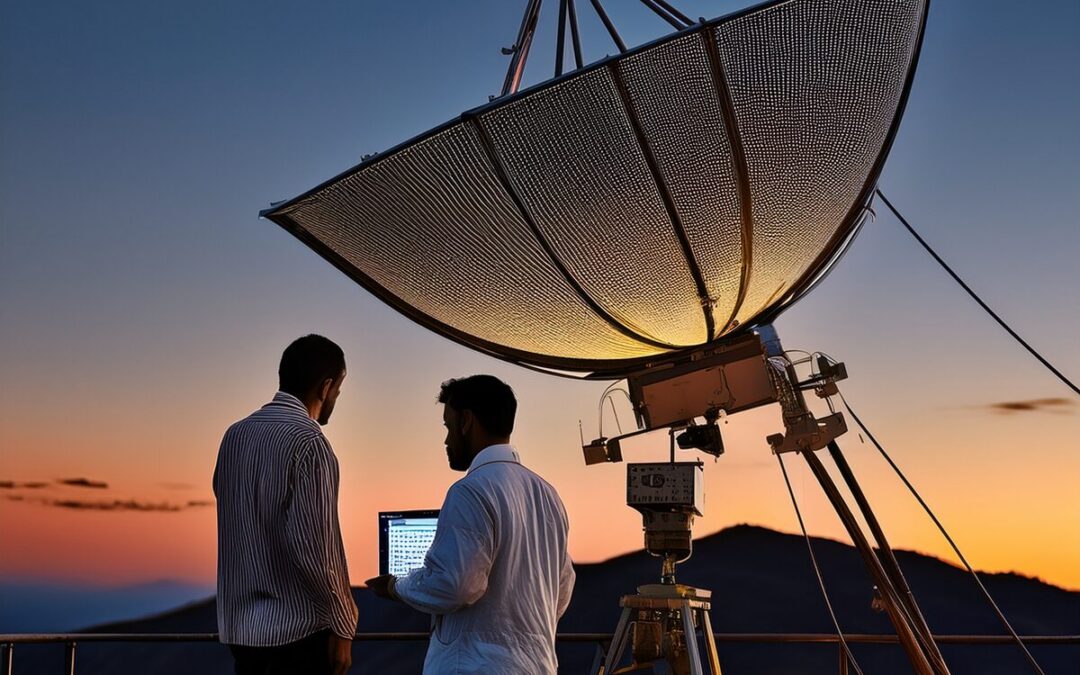
- Low-Earth-orbit constellations and Direct-to-Cell links can connect standard smartphones in places where there is no terrestrial signal at all, effectively acting as space-based towers over deserts, mountains, oceans, and lightly populated back roads.
- Trials and early deployments in rural Africa and North America already show satellite-supported calls and data sessions working on ordinary phones, proving that remote towns can leapfrog straight to satellite coverage without waiting for fiber and towers – especially when paired with satellite phones for emergency use.
- A single constellation can cover vast territory. Satellites are particularly attractive where building and maintaining a tower (plus backhaul, power, and access roads) cannot be justified by a handful of users.
Why Rural Towers Still Matter
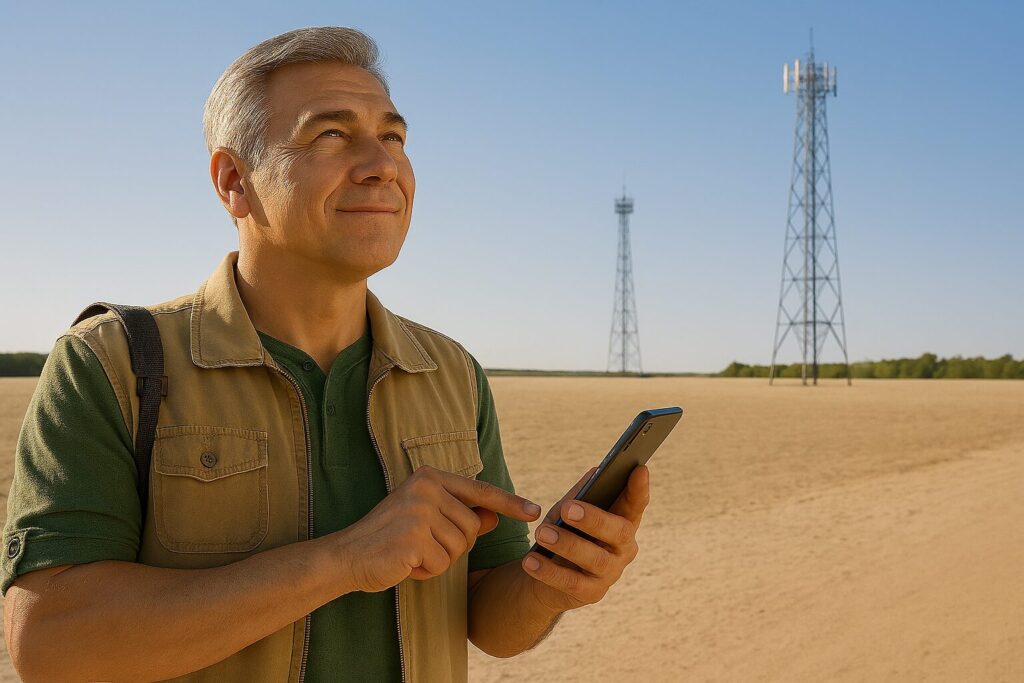
- Terrestrial LTE/5G towers deliver much higher capacity and lower latency per user than satellite, which is critical for streaming, remote work, online school, and modern apps; experts note that where there is any reasonable population density, cellular remains the more scalable option.
- Industry leaders such as Iridium’s CEO and major U.S. carrier executives say satellites will not replace tower-based networks but will instead prevent some new rural towers from ever being built in extreme locations where they “don’t pay” economically.
- In practice, when a phone can see a terrestrial signal, it will almost always use that first. Otherwise, the satellite becomes “Plan B” when you drive or hike out of coverage, not the default everyday connection for most rural residents. To understand where towers still make sense, network planners need accurate views of existing infrastructure—fiber routes, data centers, and tower locations—using specialized GIS telecom data products.
The Likely Outcome: Blended, Location-Aware Networks
- Analysts increasingly describe the future as a “blended model”: towers cover towns, villages, and key roads; Wi-Fi (calling over fixed broadband or satellite) handles indoor gaps; and Direct-to-Cell satellites and satellite phones provide a safety net for true dead zones and emergencies.
- This blend means fewer new-builds for rural towers at the very edges of the map, but continuing investment in upgrading existing rural towers and adding small cells where demand grows (especially as video and IoT use increase).
- For rural users, the practical effect is more choice and resilience: better tower-based service where they live and work, plus satellite coverage when they travel off-grid, with their phone quietly switching between layers in the background.
- National Security is also a benefit of a blended model. If all cellular data were shared in space, it would become a prime target during a time of war. This is because, hypothetically, it’s easier to sabotage a satellite than multiple terrestrial towers.
Accurate fiber routes, tower locations, and broadband coverage maps become critical inputs to every rural investment decision, while operators decide where satellites can replace planned terrestrial builds. GeoTel’s GIS-driven telecom datasets give planners the necessary infrastructure “ground truthing” that they need to design efficient blended networks. To explore where Direct-to-Cell can complement your existing footprint, identify stranded tower assets, or prioritize infrastructure development, contact GeoTel and request a demo today!