The Challenge: Planning with Incomplete Data
Network planners face a simple but persistent problem: the data they need isn’t always current or complete. The telecom infrastructure is constantly evolving. New data centers come online. Networks expand. When you’re trying to determine which fiber route is closest to a proposed site or where to build a data center nearest to existing fiber assets, outdated maps create real problems.
That’s where having access to the best telecom geospatial platform, like GeoTel’s TeleTracker, with continuously updated data makes all the difference. Instead of piecing together spreadsheets, legacy GIS files, and carrier websites, teams can work from a single source of truth that shows exactly where the infrastructure exists today.
Why Accurate Data Changes Everything
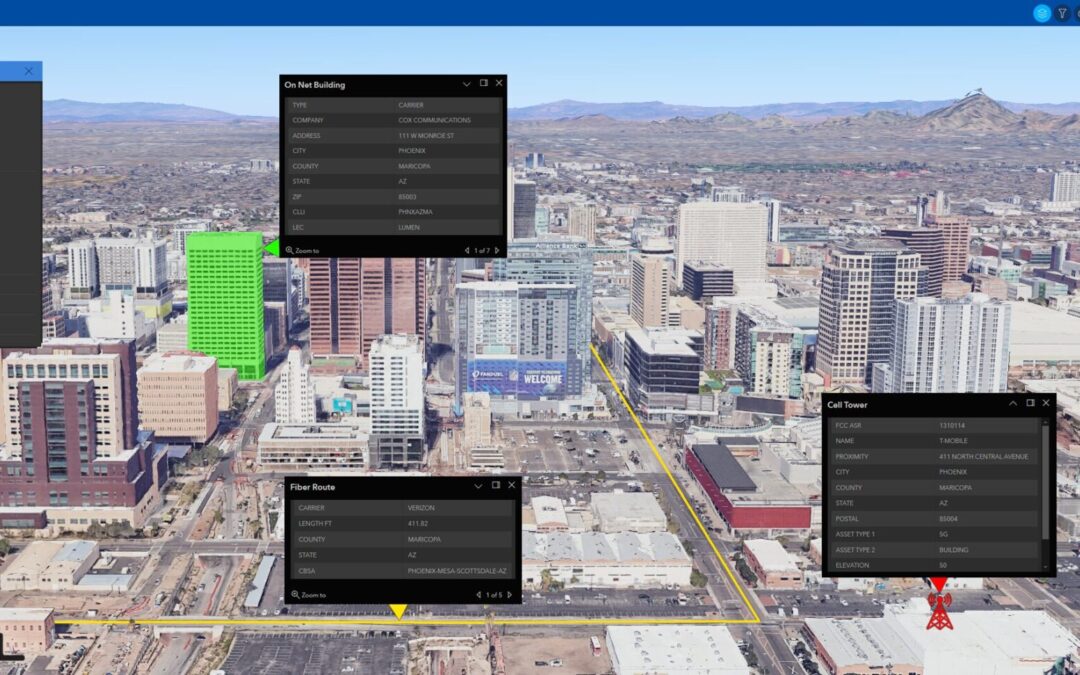
When you’re evaluating cities for expansion, the ability to run buffer analysis and nearest asset searches quickly becomes a necessity. Can you identify all fiber routes within 500 meters of a data center site? What about fiber lit buildings within a 1-mile radius?
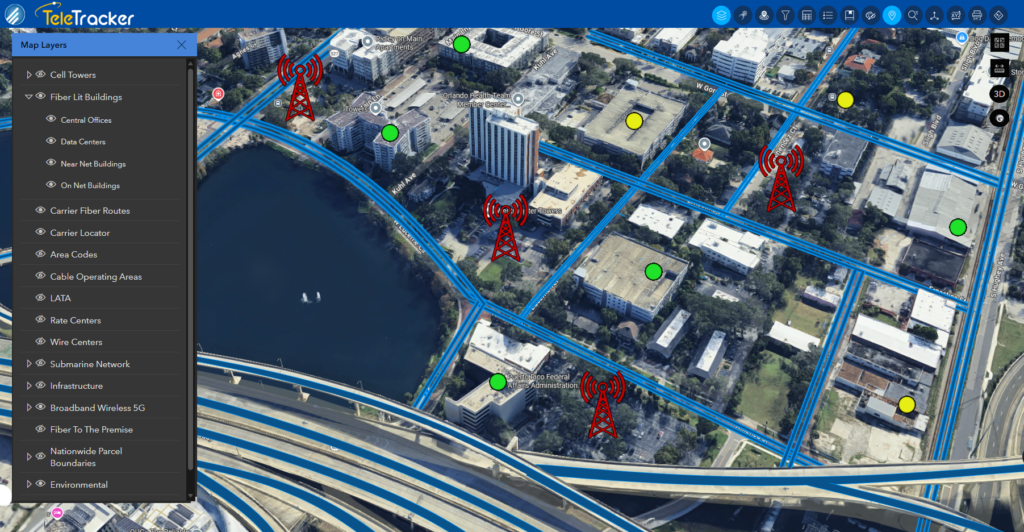
With current data and GeoTel’s telecom locator software TeleTracker, these questions take minutes instead of days. Planners can overlay carrier fiber routes, compare route diversity, and measure proximity to data centers – all in one place. That speed lets teams focus on strategy rather than data cleanup. Additionally, visual site analysis is available in the form of several layer styles, as well as Google Maps Street View of a target location.
The result? Better site selection, faster feasibility studies, and fewer surprises during construction.
Real Planning Questions, Real Answers
Examples of how TeleTracker offers solutions for telecom professionals:
“Which fiber route is closest for data center development?”
TeleTracker allows users to draw a buffer around specific sites. The platform highlights candidate routes ranked by distance, provider, and type.
“Where should I develop nearest to other fiber assets?”
Telecom professionals can run proximity analysis across multiple potential locations within TeleTracker. Overlays of these locations can include attribute filters such as fiber lit buildings, exchanges, and routes to objectively score each option and select the site most viable to the user.
“How can I compare prospective areas or cities during development stages?”
Users can apply the same spatial filters to each metro area, then confidently compare fiber density, lit building counts, and route diversity side-by-side. In the pipeline of infrastructure expansion and/or development, teams at every step of the process can view the same data with helpful visuals, better understand game plans, and execute faster with fewer hiccups.
Smart Cities Success Stories – Using GIS for Real Infrastructure
Houston: Data Drives Resilience
Houston shows what happens when cities get proactive about using data for smarter infrastructure decisions. After years of rapid growth amid climate challenges, city leaders began integrating transportation, utility, and flood risk data to guide development.
The result? Better coordination across agencies and more resilient infrastructure planning.
Technology and equity in cities become real when planners can identify fiber providers, fiber lit buildings, and data centers across ALL Houston neighborhoods (not just the premium downtown corridors). Right-of-way mapping and fiber planning become much clearer when you can see exactly where metro fiber already exists.
Los Angeles: Strategy at Scale
Los Angeles took a different approach with SmartLA 2028, treating technology, infrastructure, and data as one interconnected system. By standardizing data across departments, the city improved everything from transportation planning to public safety.
Other cities are watching closely because LA’s framework shows how integrated data platforms can scale across massive metro areas. A Los Angeles fiber map with up-to-date carrier routes, fiber-lit buildings, and data center locations becomes a model for any urban telecom team – revealing exactly where metro fiber coverage works best and where small cell deployments or broadband expansions make the most sense. The SmartLA approach proves that when planners can see which routes serve high-value development sites, they make faster, smarter infrastructure decisions that benefit the entire region.
https://ita.lacity.gov/sites/g/files/wph1626/files/2021-05/SmartLA2028 – Smart City Strategy.pdf
Boston: Transparency Meets Technology
Boston proves smart cities aren’t just about infrastructure – they’re about trust. Through Smart Streets and similar initiatives, the city explains exactly what sensors collect, how data gets used, and what it means for residents.
Network planners benefit from the same transparency mindset. A Boston fiber map showing accurate locations builds accountability into every decision. Transparent data collection ensures progress of expansion (for example, new cell tower planning analysis of 5G backhaul internet connections) that serve residents (ultimately helping them live and work in the safest, most efficient city possible). By proactively mapping existing assets, Boston grows its telecom infrastructure with residents’ needs first, preventing costly surprises while building trust in every fiber route and cell site decision.
How TeleTracker Makes This Practical
TeleTracker brings all this together into one cloud-based platform. No GIS expertise required. No software downloads. Just current telecom data (fiber routes, carrier facilities, lit buildings, cell sites) continuously updated and ready to use.
The platform’s strength lies in its straightforward accuracy. TeleTracker allows users to:
- Draw a buffer to find nearby assets
- Search by address to reveal carrier presence
- Compare cities using consistent metrics
- Generate reports that meet geospatial data standards – clear, standardized, and trusted by agencies and enterprise clients alike.
That’s why teams rely on it for everything from daily site evaluations to strategic market expansion.
The Bottom Line
Accurate, up-to-date telecom GIS data isn’t a luxury – it’s how planners avoid mistakes, move faster, and build smarter. When every decision depends on knowing where the fiber runs properly, platforms that deliver current, comprehensive data give teams a real advantage.
Ready to see it in action? Schedule your demo today: Contact GeoTel