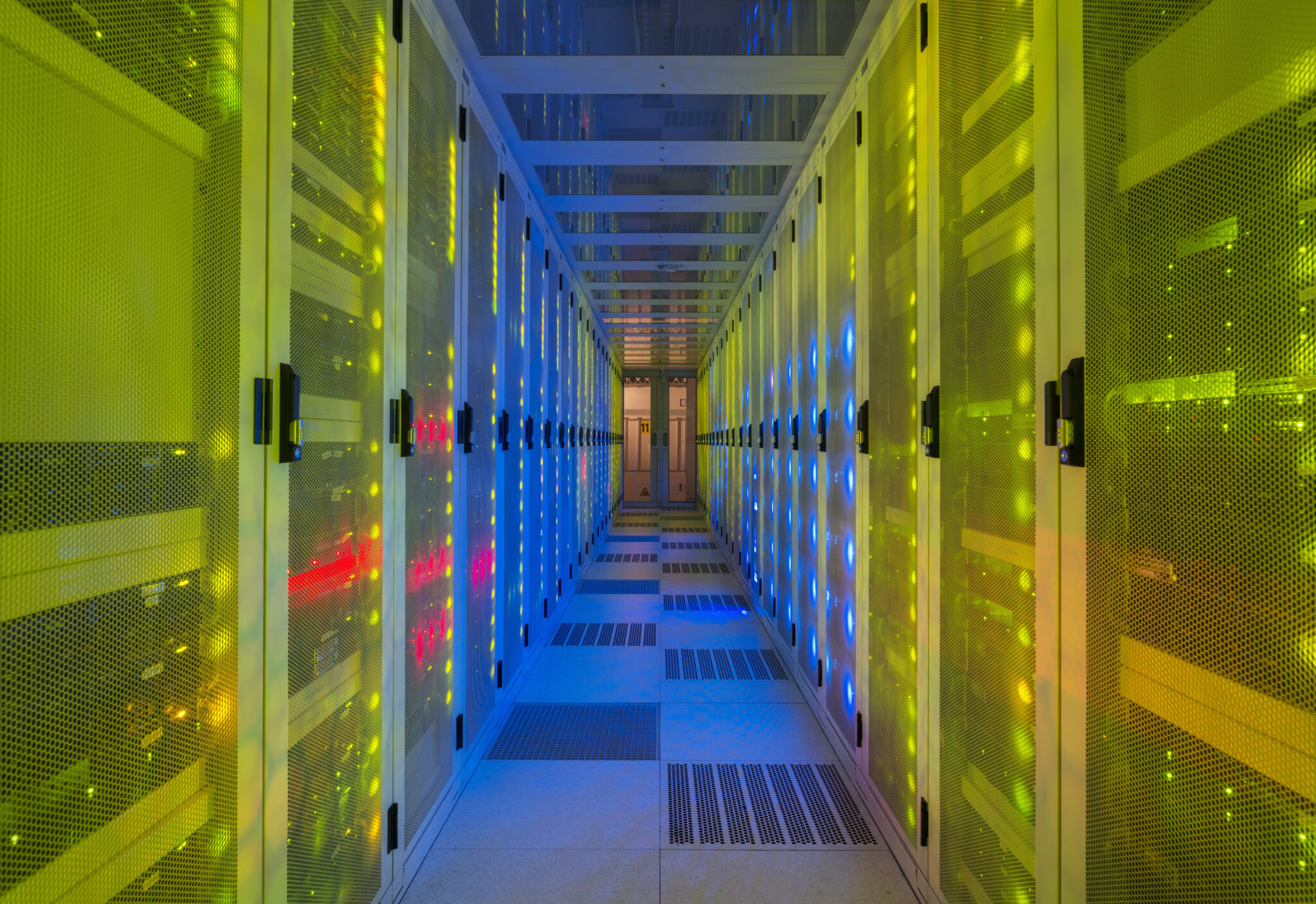
Nearly every mobile app, streamed video, and cloud‑based service depends on the computing power of data center infrastructure.
These massive facilities power our digital world around the clock, hosting vital data, cloud applications, and global communications. In and around each data center facility lie valuable components that shape the modern telecom landscape (such as power, cooling, security, and more). Having the right profile of elements in a data center directly affects organizations’ performance, reliability, and enterprise growth.
So, what are all the pieces that comprise the anatomy of data center infrastructure?
Power Systems and Backup Generators
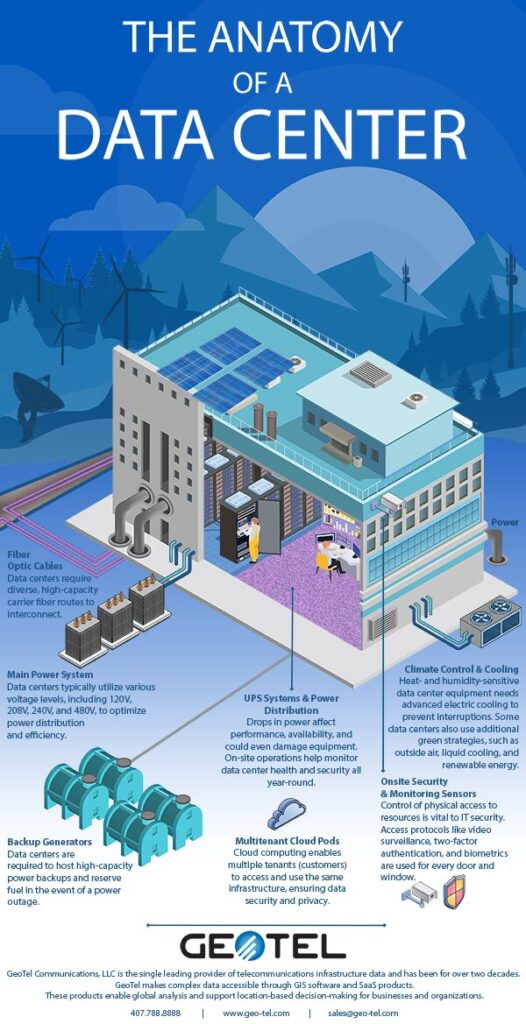
Every data center needs electricity. The main power system of most common data center infrastructure draws from the local utility grid (think of the electric poles along a highway) and distributes power at varying voltage levels (120V, 208V, 240V, and 480V) to support energy use across servers and other components.
Uninterruptible Power Supply (UPS) systems monitor voltage and bridge source gaps between power outages. During these power outages, diesel or green energy backups spring into action instantly. Tier III or IV facilities provide crucial redundancy, ensuring a continual workflow when main systems fail. Modern data centers have been working to integrate renewables and redundant reserves, ensuring continuous operations without sacrificing sustainability.
Cooling Systems and Energy Efficiency of Data Center Infrastructure
Heat threatens performance. Sophisticated on-site cooling systems govern temperature and humidity, and static protection shields hardware. Raised-floor air distribution, liquid cooling, and AI thermal monitoring help maintain stability and prolong equipment life. Facilities can also follow ASHRAE TC9.9 thermal guidelines to keep intake temperatures optimal.
Modern data center innovators also instill forward-thinking initiatives to both meet and exceed the U.S. Department of Energy’s ambitious energy targets. These efforts include, but are not limited to, recycling waste and heat, and using chillers powered by clean energy.
Fiber Connectivity and Optical Carrier Routes
Carrier fiber routes connect data centers across regions, providing the low‑latency, high‑bandwidth connectivity needed for cloud storage, streaming services, and large‑scale enterprise systems.
Mapping these carrier fiber routes is essential for any organization running sensitive workloads. With proper fiber maps, users can visualize which fiber networks aid specific data centers and enterprise locations, enabling them to choose the best connectivity for their business.
Cloud Infrastructure and Multitenant Pods
Using virtual software combined with healthy infrastructure, a single data center can host multiple tenants safely and effectively (i.e., multiple organizations can be hosted within the same physical infrastructure). Modern, hyperscale operators (like Google) can design for massive cloud environments with strict redundancy. After reviewing cloud infrastructure, it’s vital to understand the security measures guarding these facilities.
Security and Monitoring Systems
Both physical and digital security systems are vital for sensitive telecom information inside a data center. Data center security relies on a layered strategy to safeguard infrastructure from cyber threats, blending robust network protections—such as firewalls, intelligent threat detection, and VPNs—with tightly managed access controls like multi-factor authentication and biometric verification.
GIS and Location Intelligence in Data Center Planning
GIS data and location intelligence can make all the difference to confidently drive your data center site selection and redundancy planning. Knowing carrier fiber routes and fiber lit buildings helps limit downtime and keeps your organization ahead of costly disruptions. It’s important for organizations to strategically position themselves with proper data center data.
GeoTel’s data center data showcase exact data center locations, ownership, colocation, and markets s enabling planners to compare redundancy and expansion potential across regions. This telecom infrastructure GIS data powers network expansion mapping and deployment planning.
Why the Anatomy of a Data Center Matters
Grasping the anatomy of data center infrastructure – from robust power and cooling to smooth fiber connectivity and solid security – gives network engineers and business leaders a competitive edge. Investing in reliable infrastructure data helps steady system operations and thus gives teams space for innovation and progress.
Take the next step: map your organization’s data center connectivity, evaluate carrier fiber networks, or identify the optimal data center locations to keep your business ahead.
Contact a GeoTel specialist today to schedule your personalized demo.
https://www.geo-tel.com/contact/