Utilizing fiber maps transforms telecommunications data into actionable business intelligence. With fiber broadband now passing 76.5 million U.S. homes and 13% annual deployment growth, understanding how to read fiber maps has become essential for network planning, site selection, and competitive analysis. Whether you evaluate internet service providers for new locations or plan infrastructure investments, fiber mapping skills enable faster decisions backed by comprehensive location-based intelligence.
What Are Fiber Maps?
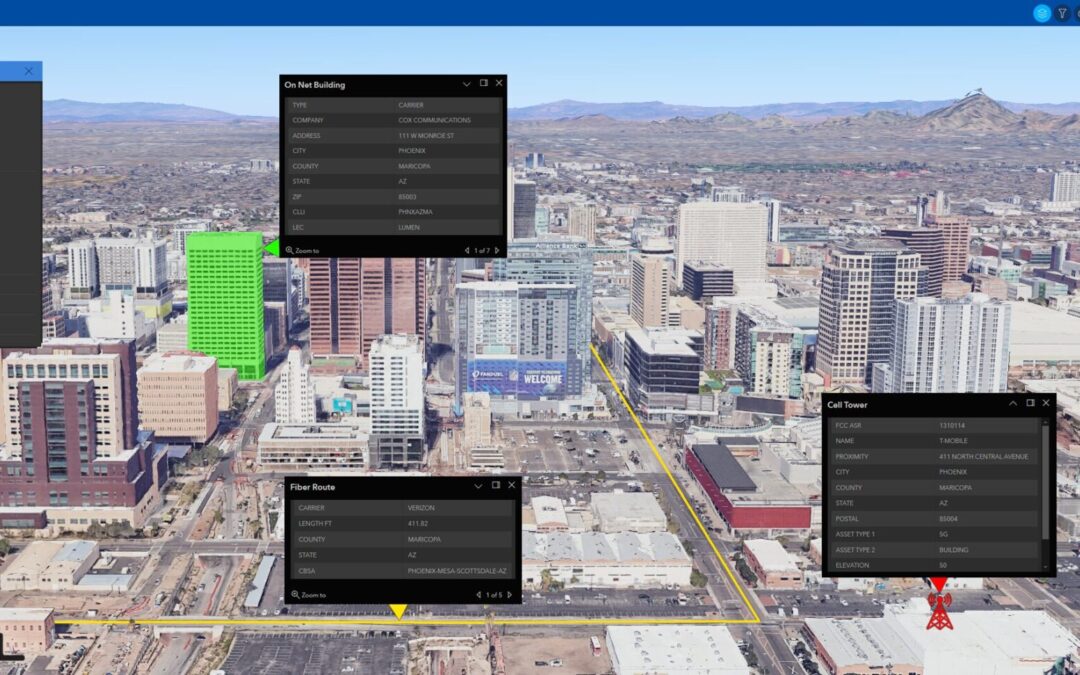
Fiber maps visualize telecommunications infrastructure, showing the physical placement of fiber cable networks, carrier routes, connected buildings, and telecom assets across geographic areas. These maps layer data onto street maps and aerial imagery, revealing the hidden network of cables and connectivity options powering modern communications. Unlike basic broadband availability searches, professional fiber maps provide detailed carrier information, route specifications, and network attributes essential for planning.
GeoTel’s fiber maps encompass more than 15 telecommunications datasets, including millions of miles of carrier fiber routes from over 7.5K internet providers, more than 533,000 cell towers, and over 15.65 million fiber lit buildings across the United States. Modern fiber mapping technology has evolved from static paper drawings into dynamic GIS-based visualization platforms. Users can pan across regions, zoom into specific locations, and create reports by toggling data layers on or off to answer location-specific questions, visualize competitive landscapes, identify coverage gaps, and determine which carriers service specific buildings at each address.
Why Fiber Maps Matter for Business Decisions
Telecommunications infrastructure planning requires precise location intelligence. Organizations conducting site selection need to know which internet service providers serve potential locations, whether redundant routes exist for continuity, and how connectivity options compare. Without detailed maps, businesses risk selecting locations with limited carrier choice or inaccurate placement.
According to the Federal Communications Commission, broadband access remains critical for economic development. The FCC’s Broadband Data Collection program tracks deployment nationwide, yet raw data lacks visualization tools and carrier insights that professional fiber mapping platforms deliver. The telecom industry has grown complex as deployment accelerates. According to the Fiber Broadband Association, fiber take-rates reached 45.2% adoption in 2024, demonstrating strong market preference.
Fiber maps enable competitive intelligence informing market entry strategies. Telecommunications providers identify underserved rural areas and urban areas with limited competition. Local government agencies bridge the digital divide by identifying regions requiring investment. The financial stakes make accuracy critical. Multi-million dollar projects require confidence in connectivity data. Professional maps deliver reassurance through regular maintenance and updates that capture the full landscape rather than partial snapshots at a baseline date.
Key Elements Every Fiber Map Contains
Professional fiber maps integrate essential data elements, revealing the complete infrastructure picture. Understanding these components enables you to extract maximum value and answer specific business questions with minimum hesitation.
Carrier Fiber Routes
Fiber routes represent physical paths that fiber cables follow underground in conduit, aerial on utility poles, or in submarine installations. These lines show where carriers deployed infrastructure and network extent. Routes can be classified by type: metro fiber (urban networks), long-haul fiber (inter-city connections), and middle-mile fiber (regional connectivity). The carrier fiber routes dataset reveals which carriers own each route segment.
Fiber Lit Buildings
Buildings with fiber connections appear as points showing where carriers established their presence. The fiber lit buildings database distinguishes on-net buildings (direct connections) from near-net buildings (proximity requiring extensions). Each record includes servicing carriers, building address, and attributes essential for site selection, competitive analysis, and real estate evaluations where connectivity affects property price.
Wireless Infrastructure and Boundaries
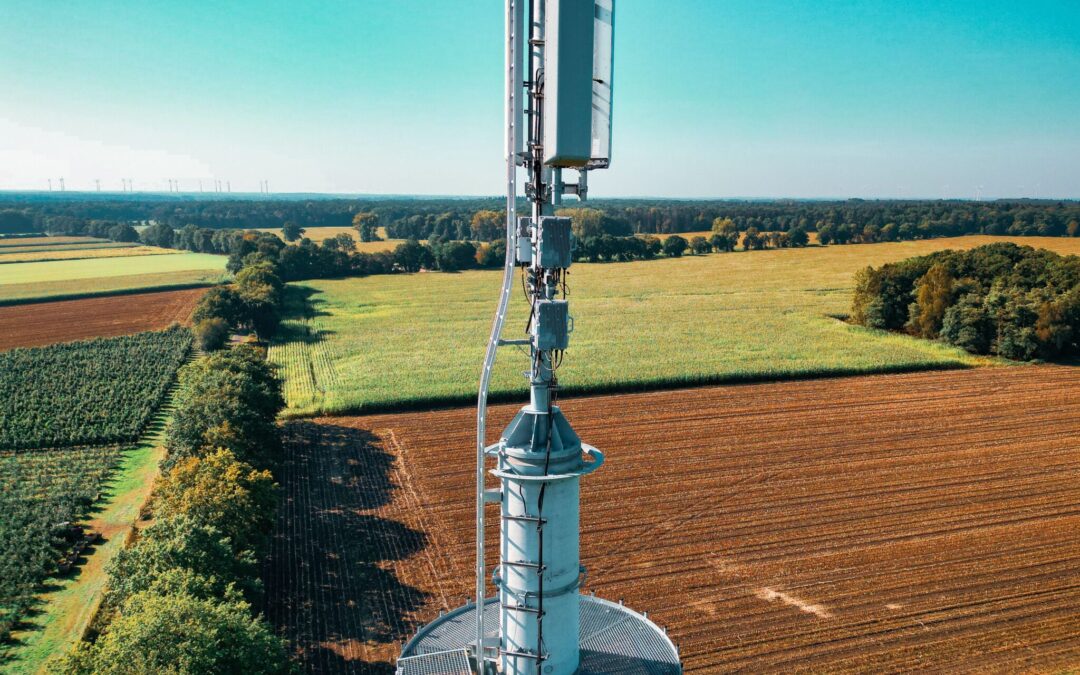
Cell towers, small cells, and rooftop sites are wireless components that connect to fiber backhaul networks. Cell tower datasets show locations, equipment types, and carrier assignments. Boundary datasets define service territories and regulatory jurisdictions, including wire center boundaries, LATA boundaries, and area code boundaries, providing context for compliance and planning.
Understanding Different Fiber Map Data Layers
Fiber maps organize information into separate layers that users view individually or combined. Software platforms manage these layers to generate insights answering specific questions.
The Carrier Layer
The carrier layer reveals which internet providers have infrastructure in any area, allowing filtering by carrier names to see network extent. When evaluating office locations, toggling major carriers shows competitive options available. Dense carrier presence indicates robust competition, providing negotiating leverage. Sparse coverage signals limited choices and vendor dependency risks.
The Building Connectivity Layer
The building layer reveals which carriers provide service and whether connections are on-net or near-net. On-net means carriers have infrastructure directly to buildings with shorter timelines and lower costs. Near-net buildings require construction extending fiber, adding time and expense. For organizations planning multiple locations, systematically checking connectivity identifies cost-effective options with desirable carrier diversity.
How to Read Fiber Map Symbols and Legends
Every fiber map includes a legend defining symbols, colors, and line styles representing infrastructure elements. Reading legends carefully ensures correct interpretation, preventing misunderstandings. Color coding typically distinguishes carriers, with each provider assigned unique colors for route lines.
Pro Tip: When evaluating fiber maps initially, zoom into familiar areas where you know infrastructure and verify map symbols match reality. This calibration builds confidence interpreting unfamiliar regions where you lack direct knowledge of carrier presence.
Point symbols identify specific elements. Small dots or cell tower icons mark cell towers, with shapes differentiating tower types. Building symbols use different icons for on-net versus near-net status. Attribute tables accessible by clicking elements provide detailed information, including carrier names, location, and contact information. Professional GIS-based platforms allow exporting attributes for analysis or integration with business systems.
Step-by-Step: Reading Fiber Maps for Site Selection
Site selection benefits from a systematic analysis that evaluates connectivity, cost, and risk factors.
- Start by zooming maps to candidate locations and toggling carrier layers to see provider infrastructure. Note carriers with routes that pass near or at buildings.
- Check connectivity status and distinguish on-net from near-net options. Sites with three or more diverse carriers can typically offer better pricing and reduced vendor lock-in risk.
- Examine the physical paths carriers use to reach sites. Look for geographically diverse entry points where fiber approaches from different directions, potentially reducing failure risk.
- Identify shared infrastructure representing single points of failure. For near-net sites, estimate distance from existing routes. Shorter extensions under 500 feet can incur lower costs and faster timelines compared to longer builds requiring expensive construction and permitting processes.
- Review wireless infrastructure near sites. Proximity to towers with 5G provides backup options. Buildings with both fiber and wireless signals offer flexibility. Recent years have seen satellite internet emerge as another option, though fiber remains the gold standard for bandwidth-intensive applications requiring minimum latency and maximum download speeds.
Common Mistakes When Interpreting Fiber Maps
Organizations new to fiber map analysis make predictable mistakes, leading to incorrect conclusions.
Map Display
One frequent error confuses map display with actual availability. Just because routes appear near buildings does not guarantee service availability. Routes may lack availability, be on private property, or serve wholesale markets only. Always verify apparent connectivity with the carrier rather than assuming proximity equals availability.
Carrier Restraints
Another mistake treats all carriers as equivalent. Maps showing multiple carriers may not reveal that some provide only specific service types, like dark fiber leasing, rather than lit services. Understanding each carrier’s portfolio prevents pursuing options that appear viable but prove unavailable for specific use cases. This challenge exists across DSL providers, cable companies, and fiber carriers serving different market segments. The best way to avoid this is to contact the carriers directly.
Misinterpretation of Data
Misinterpreting data currency represents another pitfall. Maps display infrastructure data as of the last update dates, potentially lagging current conditions by months in rapidly deploying markets. Recently constructed routes may not appear, while shown infrastructure reflects completed deployments. Check data and confirm currency before final decisions. This proves especially important in rural parts and underserved regions where deployment projects happen frequently.
Professional Fiber Mapping Tools vs. Consumer Options
Understanding differences between consumer-grade availability tools and professional GIS-based platforms prevents reliance on inadequate data sources for important decisions. Consumer broadband availability websites provide basic yes-or-no answers about whether internet service is available at addresses. These tools serve residential households choosing home internet providers but lack detailed carrier information, route specifications, and infrastructure attributes that businesses require for planning. Consumer tools typically do not reveal which providers offer service or where routes physically run.
Professional platforms like TeleTracker deliver comprehensive infrastructure intelligence through GIS-based interfaces. These platforms integrate multiple datasets showing routes, buildings, towers, data centers, and boundaries. Users filter by carriers, types, and attributes.
| Feature | Consumer Tools | Professional Platforms |
|---|---|---|
| Carrier Identity | Generic "fiber available" | Specific ISPs and contact info |
| Route Details | Not shown | Exact paths and types |
| Building Data | Address availability | On-net vs near-net status |
| Infrastructure Layers | Single view | 15+ separate datasets |
| Data Updates | Irregular | Regular professional maintenance |
The cost difference reflects the value gap. Consumer tools remain free because they serve simple residential needs. Professional platforms require investment because they deliver intelligence supporting infrastructure decisions. For organizations making significant commitments, professional platforms provide the necessary quality, currency, and depth, reducing risk.
Accessibility has improved dramatically. While early fiber mapping required GIS expertise and specialized software like Visio for creating custom diagrams, modern platforms offer intuitive web interfaces requiring only internet access, username, and password. This allows business professionals without technical backgrounds to leverage sophisticated intelligence previously accessible only to specialists with plenty of training.
Frequently Asked Questions
What’s the difference between fiber maps and regular maps?
Fiber maps layer telecommunications infrastructure data onto geographic base maps, revealing hidden networks of cables, routes, and buildings. Regular maps show streets and terrain but not communications infrastructure.
How accurate are fiber maps?
Accuracy depends on provider research methodology and update frequency. Professional providers conduct extensive verification to maintain accuracy through regular updates reflecting new construction and changes. GeoTel updates its fiber database daily.
Can I see fiber maps for free?
Basic consumer tools provide limited free access without detailed carrier data. Comprehensive professional fiber maps require subscriptions because maintaining accurate databases involves significant research investment. Organizations can request demonstrations before committing.
What’s the difference between on-net and near-net buildings?
On-net buildings have direct fiber connections with shorter timelines and lower costs. Near-net buildings require extending fiber during construction, adding time and expense and affecting project budgets.
How often are fiber maps updated?
Update frequency varies by provider. Professional providers routinely update datasets reflecting new deployments and changes. Some updates occur quarterly while others happen continuously. Always check data currency for time-sensitive decisions.
Can fiber maps show backup routes for redundancy?
Yes, comprehensive maps reveal multiple carrier routes between locations, enabling redundancy planning. Users identify geographically diverse paths from different carriers, ensuring alternative connectivity if primary routes fail.
Do I need GIS experience to use fiber maps?
Modern professional platforms provide intuitive web interfaces designed for business users without GIS expertise. Leading tools offer accessible point-and-click interfaces requiring only basic computer skills.
How can fiber maps help with site selection?
Maps enable systematic comparison of connectivity options across sites. Users identify which carriers serve locations, assess route diversity, and evaluate competitive landscapes to support evidence-based decisions.
What makes professional fiber data different from consumer tools?
Professional data provides detailed carrier information, exact route specifications, and infrastructure characteristics essential for planning. Consumer tools offer basic answers without depth. Professional data undergoes rigorous quality assurance and regular updates, driving growth in the region it serves.
Next Steps
Learning how to read fiber maps transforms telecommunications infrastructure into mappable business intelligence. GeoTel’s telecommunications infrastructure data and GIS solutions enable intelligent decisions backed by over 25 years of expertise and the most comprehensive geospatial databases available. Accurate infrastructure intelligence reduces risk and accelerates timelines.
Experience firsthand how our comprehensive telecom datasets can empower your business by contacting GeoTel for a demonstration of the TeleTracker platform.